 Buffalo Personal Injury Lawyer News
Household Guest Injuries Compensable Under Homeowner Policies


 Each year, over 10 million victims are treated in emergency departments nationwide for home-related injuries. Fortunately, almost every homeowner carries insurance, and many tenants maintain renter policies. This type of insurance shields residential property owners against personal liability when someone else suffers bodily harm or property damage in an accident caused by the homeowner’s negligence. While homeowner’s insurance is typically regarded as protection against property damage, these policies also provide crucial liability coverage for guests’ injuries.
Are Accidents In Homes Covered By Insurance?
All land owners, including homeowners, are legally obligated to maintain their property reasonably safe for guests. When property owners expose visitors to unnecessary risks by failing to remedy safety concerns or neglecting to warn guests about known dangers, they can be held responsible for any adverse consequences suffered. Victims of household-related injuries are responsible for more than 6 million insurance claims annually. Coverage for bodily injury could compensate an injured person for their medical expenses if their injuries were caused by the owner, other household residents, or even their pets. Additionally, if a guest’s property is damaged, the homeowner’s policy could pay for its repair or replacement.
 When you hire a personal injury attorney to litigate your accident case, knowing that you have certain rights as a client is crucial. Strict standards of ethical and professional responsibility bind personal injury lawyers. The relationship between an attorney and their client should be based on confidence and trust. At the Dietrich Law Firm P.C., our battle-tested litigators believe in building strong relationships with our clients. We take the attorney-client relationship exceptionally seriously and are dedicated to treating every client with the respect, consideration, and compassion they deserve.
  The word bellwether can be traced back to the 13th century when shepherds hung bells around the necks of some of their sheep to designate them as leaders. Similarly, bellwether trials are designed to track and monitor the potential results of a large group of lawsuits. They are test lawsuits that use individual claims originating from a group of widely contested lawsuits filed against the same party. When hundreds or even thousands of lawsuits are filed against one party, these trials allow a few select cases to go to court to predict how the remaining pending claims will turn out at trial.
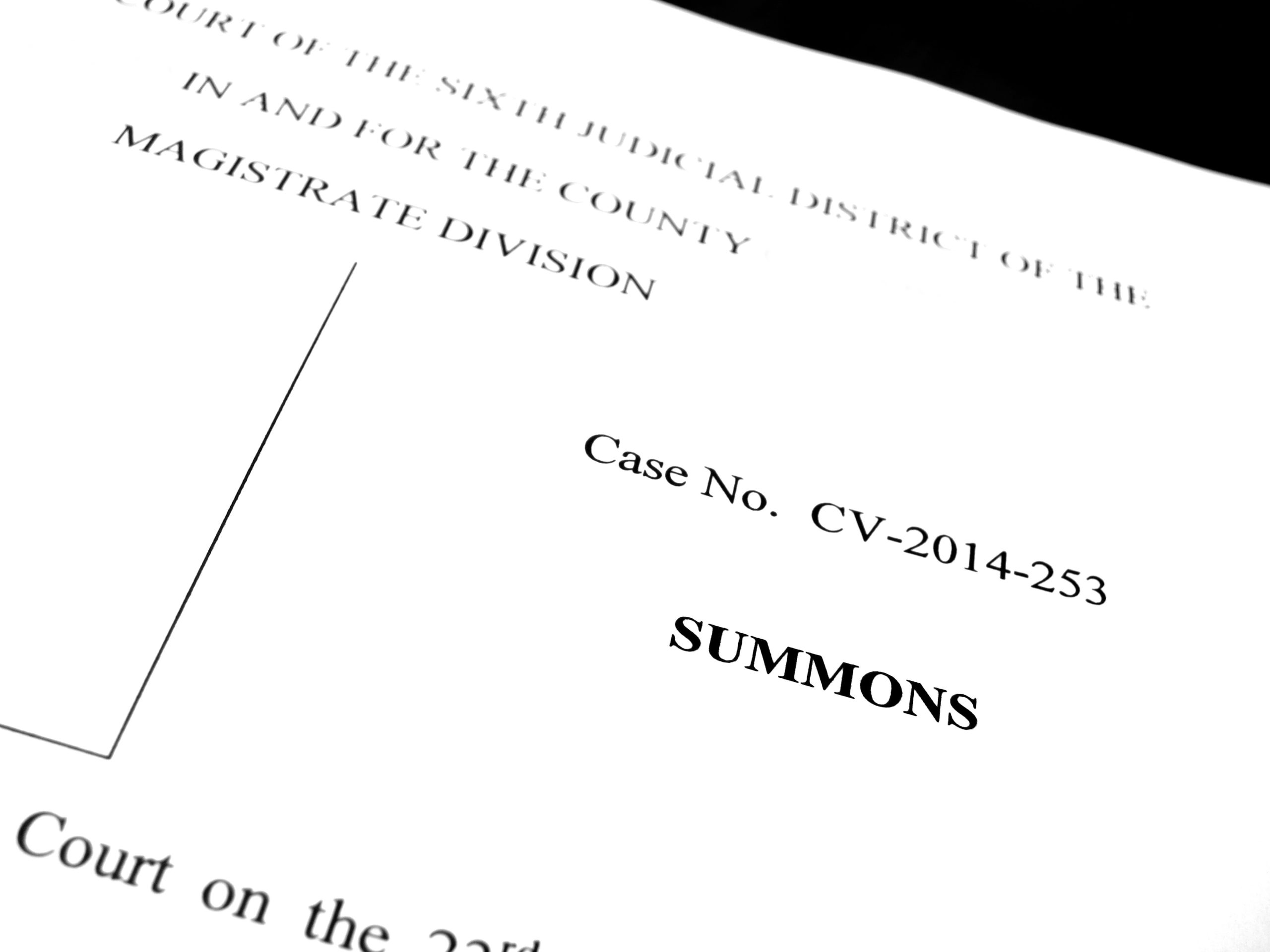 After being injured in an accident, knowing what to expect when pursuing your claim brings you peace of mind. Some of our most frequently asked questions are about the summons. At the beginning of a lawsuit, a summons and complaint are two legal documents served to all defendants. The summons informs the defendant of the plaintiff’s commencement of the legal action and demands that they answer the complaint.
  Suppose that you, or a family member, have been injured in an accident caused by another person’s negligence or recklessness. You may be able to file a personal injury lawsuit. Pursuing a case against the responsible party could be your only means to recover compensation. However, you only have a limited time to file your claim. The deadline is known as the statute of limitations (SOL). The statute of limitations, like a countdown, can significantly impact when or even if you can pursue your case. Regardless of the strength of your claim, when the statute of limitations runs out, your case will be considered time-barred. Meaning the defendant can assert that the statute of limitations has run out and ask the court to dismiss the lawsuit on that basis alone.
 Liability in personal injury cases is often unclear and ambiguous. This is because a defendant may not be entirely responsible for the accident. It is not uncommon for plaintiffs to be partially at-fault too. Fortunately, victims may still be eligible to recover compensation for their damages even if they were partly to blame. When applying the legal doctrine of comparative negligence, also known as comparative fault, a plaintiff that contributed to their accident would still be awarded compensation for their damages. However, the total amount would be reduced based on their share of fault. Whether you have been hurt in a car crash, construction accident, slip and fall, or any other mishap, comparative negligence can significantly impact the compensation you obtain.
  Falls are one of the leading causes of personal injury accidents throughout the United States. While falls can happen anywhere, these accidents are especially common on stairs. Each year, more than 1 million victims injure themselves on stairways. All property owners and managers are legally obligated to keep their properties safe for tenants, visitors, and workers alike. This obligation includes inspecting and maintaining stairways and making timely repairs to potentially dangerous conditions. When a staircase accident occurs because of hazardous or improperly maintained stairs, the responsible property owner, landlord, or management company can be held liable for the victim’s damages.
  To prove fault in most personal injury lawsuits, a plaintiff must show that the defendant was negligent. Victims have the burden of demonstrating four legal elements to prove negligence. The first element of negligence is the at-fault party’s duty of care. Typically, this is one of the easiest elements to prove because everyone has a basic obligation to avoid unnecessarily injuring others. The duty to act appropriately is relevant in almost every situation and is often assumed by being in another’s vicinity. In other words, you must implement the same degree of caution and consideration that a reasonable person would exercise given the same situation. Someone does not need to assume the duty of care to another party voluntarily. It can be imposed just by being in a specific place at a specific time.
  Victims often turn to personal injury claims to recoup their losses after being injured in accidents. If the verdict is in the plaintiff’s favor, they can obtain a monetary award for their losses. One type of damage awarded to victims is called compensatory damages. Compensatory damages are designed to pay victims money to cover the costs related to their injuries and other losses. In other words, this type of damage is awarded to compensate plaintiffs for the actual losses they have suffered. For instance, if a careless motorist smashed into your car and totaled it, the compensatory damages would equal the fair market value of your vehicle when it was demolished, minus the salvage value or any usable parts. The two types of compensatory damages that courts can award to plaintiffs are special damages and general damages.
 Victims suffer injuries in tens of millions of severe accidents every year, such as slips and falls, collisions, and dog bites. Most of these injuries are caused by someone else’s negligence or even recklessness. The consequences of being involved in an accident can range from serious personal injuries and post-traumatic stress disorder to the destruction of property and costly hospital bills. Over 40 million accident victims require medical care due to various personal injuries each year. If you or a loved one have been injured due to someone else’s negligence, you may be wondering what type of lawyer to call.