 Buffalo Personal Injury Lawyer News
BlueCruise Car Accidents


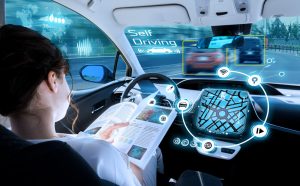
Self-driving vehicles are often marketed as the future of road transportation, but today’s regulators have serious concerns about this emerging technology’s all-around safety and general risks.
Since 2021, Ford alone has reported at least 32 collisions involving its BlueCruise driver-assistance feature. BlueCruise, like Tesla’s Autopilot, offers features like automatic lane centering and hands-free steering. According to Ford, BlueCruise is safe and works exactly as intended, provided that drivers remain constantly alert, ready to take the wheel at a moment’s notice. Nevertheless, Ford has long sought to limit liability in self-driving car accident claims by arguing that most, if not all, of these crashes come down to driver distraction and inattention.
A recent report issued by the National Highway Transportation Safety Administration calls some of Ford’s claims into question. In a summary of its preliminary investigation into BlueCruise, the agency found the drivers in two fatal accidents failed to apply their brakes or take any evasive action. At the same time, BlueCruise not only failed to respond, but its cameras and radar system failed to recognize rapidly approaching obstacles, up to and including disabled vehicles on the side of the highway.
BlueCruise’s In-Built Weakness
Ford’s BlueCruise-equipped vehicles might seem like self-driving cars, but the truth is a little more complex. BlueCruise is, instead, a type of driver-assistance feature. This means that, even if BlueCruise is capable of negotiating traffic without human input, it cannot drive entirely unaided. Motorists must remain attentive; if something goes wrong, they are expected to take the wheel.
BlueCruise does not make vehicles autonomous, but it is still a complex system. It works by interpreting data provided by:
- A network of cameras;
- In-vehicle radar; and
- GPS-derived positioning data.
If a vehicle’s computer, cameras, radar, and GPS remain operational and in constant communication with one another, the overall risk of being involved in an accident is relatively low. Problems can and do arise if any of these systems fail. Failures can happen due to software glitches and technical defects, but they often have much simpler explanations. The NHTSA believes that simply driving after dark, for instance, can dangerously limit BlueCruise cameras’ ability to “see” impending obstacles.
BlueCruise appears to have another serious weakness. In its preliminary report, the National Highway Traffic Safety Administration found that BlueCruise appears to have been programmed to effectively ignore stationary objects whenever the vehicle is traveling at or above 62 miles per hour. Ford likely enacted this precaution to prevent “phantom braking,” a phenomenon caused by the detection of non-existent hazards. An unintended consequence of this limitation appears to be BlueCruise’s ability to recognize real sources of danger in real time.
Do You Have A Case Against Ford’s BlueCruise?
Car companies like Ford have a legal duty to ensure the vehicles they sell are safe to drive.
If a manufacturer makes a mistake they did not know about and exposes consumers to an unreasonable level of risk, they could be held liable for the costs of any resulting accidents.
You could be entitled to file a personal injury lawsuit if:
- You have been involved in a car accident;
- The vehicle you were driving was made by Ford and had BlueCruise activated at the time of the collision;
- BlueCruise failed to warn you of an impending obstacle or otherwise caused your crash;
- You suffered serious injuries as a result of the accident; and
- You have sustained damages that can be compensated by a court of law.
Contact the Dietrich Law Firm P.C. today to speak to a BlueCruise injury lawyer and schedule your free consultation.