 Buffalo Personal Injury Lawyer News
How Do You Prove Negligence?


 Suppose you have been seriously injured in an accident because of another’s wrongdoing. You may be eligible to pursue monetary compensation through a personal injury lawsuit. However, to hold the other party financially liable for your damages, you must first prove that they were negligent. Understanding the legal elements of negligence can help you win your Buffalo, New York injury claim.
The Reasonable Person Standard
A reasonable person is somebody who approaches all situations with a sufficient amount of caution before prudently taking action. This was established to provide courts with an objective criterion that can be applied when determining whether a defendant’s actions constitute negligence. In other words, a jury must decide what a reasonable person would have done under conditions similar to the defendants. After comparing the defendant’s conduct to that of a reasonable person, they may find that the defendant was negligent if their conduct failed to meet the reasonable person’s standard.
 Victims often turn to personal injury claims to recoup their losses after being injured in accidents. If the verdict is in the plaintiff’s favor, they can obtain a monetary award for their losses. One type of damage awarded to victims is called compensatory damages. Compensatory damages are designed to pay victims money to cover the costs related to their injuries and other losses. In other words, this type of damage is awarded to compensate plaintiffs for the actual losses they have suffered. For instance, if a careless motorist smashed into your car and totaled it, the compensatory damages would equal the fair market value of your vehicle when it was demolished, minus the salvage value or any usable parts. The two types of compensatory damages that courts can award to plaintiffs are special damages and general damages.
 Victims suffer injuries in tens of millions of severe accidents every year, such as slips and falls, collisions, and dog bites. Most of these injuries are caused by someone else’s negligence or even recklessness. The consequences of being involved in an accident can range from serious personal injuries and post-traumatic stress disorder to the destruction of property and costly hospital bills. Over 40 million accident victims require medical care due to various personal injuries each year. If you or a loved one have been injured due to someone else’s negligence, you may be wondering what type of lawyer to call.
 An accident victim could file a claim against an employer if their employee caused their accident in certain situations. Since the employee caused the accident, you may be wondering how the victim can pursue a personal injury lawsuit against their employer. The answer lies in an old legal theory called respondeat superior. Respondeat superior originates from an ancient Latin saying, “let the master answer.” This principle held masters legally responsible for the actions of their servants. In the modern world, respondeat superior is still commonly applied in common law to hold employers liable for the actions of their employees.
 Many accident victims seeking damages in personal injury lawsuits are surprised to learn that an insurance company, doctor’s office, physical therapy clinic, or another party has placed a medical lien against their monetary compensation. As a result, victims may receive significantly less money than they anticipated. Since liens can substantially affect your financial outcome, knowing what they are and exactly how they work is crucial.
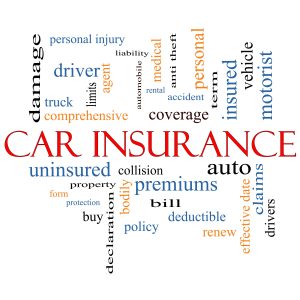 If you, or a family member, have suffered injuries in a Buffalo, New York car accident, you may be entitled to obtain monetary compensation. However, New York is a “no-fault” state which means that regardless of who was responsible for the crash, both drivers and passengers must file claims against the no-fault insurance of the vehicle that they were in. Under New York law, proof of no-fault insurance, also commonly referred to as personal injury protection (PIP) coverage, is required before registering a vehicle. Personal injury protection coverage promptly pays accident victims for their economic damages, such as hospital bills, lost income, and other essential expenses.
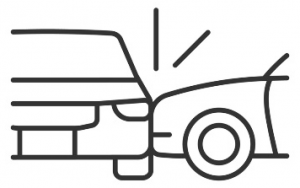 A T-Bone car accident occurs when one vehicle collides with another at a ninety-degree angle, forming a “T” shape. Typically, T-bones involve two vehicles and are also known as side-impact crashes or broadside collisions. These types of accidents tend to cause severe injuries and even fatalities. According to the National Highway Traffic Administration’s (NHTSA’s) Traffic Safety Facts Annual Report, angle collisions accounted for 6,354 deaths, approximately 20 percent of traffic fatalities.
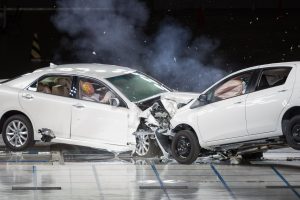 A head-on collision, also commonly known as a “front impact accident” or “frontal crash,” occurs when two vehicles moving in opposite directions smash into each other’s front ends. Because of the high speeds often involved, head-on collisions tend to be some of the most gruesome types of car accidents. Generally, the gravity of injuries accompanying front impact accidents is much more substantial when compared to other types of crashes, such as sideswipes or rear-end collisions. For victims that are fortunate enough to survive these ravaging crashes, it may take months or even years to begin to recover physically, psychologically, and emotionally. Not to mention the hospital bills and other financial damages to consider, which add further stress to victims and their families.
 It is crucial to retain a personal injury attorney whenever you have been injured in an accident caused by someone else’s negligence, carelessness, or recklessness. Everything that you do in the wake of an accident can influence the outcome of your lawsuit. Even the slightest mistake could lead to a substantially lower settlement offer or judgment. The Dietrich Law Firm P.C.’s battle-tested personal injury lawyers recommend contacting us immediately after your accident. Having a legal expert carefully review your claim and answer questions can help you better understand your legal rights. After consulting with our highly experienced and knowledgeable attorneys, you can decide the best way to proceed with your case.
 While the safety features on vehicles advance, most manufacturers have focused on protecting drivers while leaving passenger safety systems deficient. Consequently, passengers often suffer the brunt of injuries. Depending on the circumstances that led to the accident, passengers may be able to hold the drivers of the cars they were in, drivers of other vehicles involved, manufacturers of defective vehicles or parts, and government entities responsible for their injuries.