 Dietrich Law Firm P.C. Home
Over $300 Million
Recovered for Our Clients



Syracuse, New York, Blind Spot Car Accidents
Jed Dietrich, Esq., Recognized as a Super Lawyer and American Institute of Trial Lawyers Litigator of the Year, is Committed to Providing Peerless Personal Injury Service. If You, or a Loved One, Have Been Injured in an Onondaga County Blind Spot Car Accident That Was Not Your Fault, the Dietrich Law Firm P.C. Could Help You Investigate Your Accident and Assert Your Rights to a Fair Recovery.
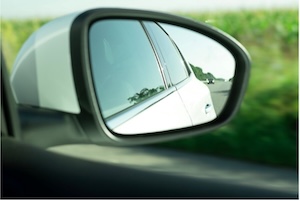 Almost everyone who has taken a driver’s education course should know that cars, trucks, and even motorcycles have blind spots. Since blind spots can extend across multiple lanes, motorists cannot afford to rely on their mirrors when changing lanes or merging into traffic. Any mistake or oversight, no matter how momentary, could cause a collision, leaving other drivers to contend with an overwhelming combination of physical pain and financial hardship.
However, you may have options for relief. If you, or a loved one, has been injured in a Syracuse, New York, blind spot car crash, the Dietrich Law Firm P.C. could help you assert your right to a fair recovery. Since our founding in 2005, we have successfully secured more than $300 million in damages for our clients, money that they have used to wipe out their medical debt, afford higher-quality care, and reclaim their independence.
Please send us a message online to schedule your 100% free consultation as soon as possible.
Motor Vehicle Accidents And Blind SpotsBlind spots are the areas around and outside a vehicle that cannot easily be seen from the driver’s seat. Every type of automobile, no matter its size or its shape, has blind spots.
The most common zones for different vehicle types include, but are not limited to, the following:
- Car Blind Spots: Cars usually have blind spots on their sides, especially near the rear end of the vehicle. Some larger consumer vehicles, like SUVs and pickups, have blind spots directly behind the cab or the rear bumper.
- Semi-Truck Blind Spots: Semi-trucks, or tractor-trailers, have large blind spots that can extend across several lanes. In general, truck drivers cannot see traffic one lane to the left of their cab and two lanes to the right. In the rear, visibility may be obstructed for up to 30 feet behind a large trailer.
- Motorcycle Blind Spots: Motorcycles, just like larger vehicles, can have blind spots. Although bikers can more easily maneuver their heads to check for oncoming traffic, they may rely, at least in part, on their mirrors. However, most motorcycle mirrors are relatively small, and they often vibrate so much that it can be difficult for riders to obtain a clear and unobstructed image of vehicles behind them. In general, though, motorcyclists are much more likely to be injured in blind spot accidents than they are to be found at-fault for causing them.
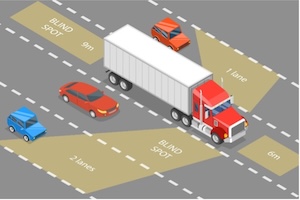 Since almost every vehicle has blind spots, drivers are typically taught and expected to “check their blind spots” before changing lanes or merging into traffic. If and when another motorist fails to do their due diligence, they place themselves and everyone around them at risk.
You do not have to accept pain and financial hardship as the price of another driver’s negligence.
If you have been injured in a blind spot accident that was not your fault, the Dietrich Law Firm P.C. could help you obtain the evidence you need to establish liability and negotiate a fair settlement. Please send us a message online or call us at 315-839-3939 to speak to a car accident lawyer near Syracuse, New York, and schedule your free, no-obligation consultation as soon as possible.
Establishing Liability After A Syracuse Blind Spot Car AccidentNew York is a no-fault insurance state, which means that motorists must typically file a claim with their own carrier before taking action against another driver. However, if and when your policy limits are insufficient to cover the costs of recovering from a serious injury, you may be entitled to file a personal injury lawsuit.
If successful, a personal injury lawsuit provides an opportunity to obtain damages well beyond the limits of your own policy. However, filing, fighting, and winning a claim almost always requires establishing the other driver’s liability, a task that is often easier said than done.
New York Laws on Lane Changes and Right-of-WayThe Empire State's official "rules of the road" are detailed in different articles of the New York Vehicle and Traffic Law. Some of these rules set particular conditions for how, when, and where vehicles can pass other vehicles. In a blind spot car accident, an alleged violation of any one or more of the following laws could be used to establish liability for a collision:
- NY Vehicle & Traffic Law § 1122: New York Vehicle Traffic Law 1122 states that, when a driver attempts to overtake a vehicle traveling in the same direction, they must remain in the left lane until “safely clear of the overtaken vehicle.” This section also specifies that “driver of an overtaken vehicle shall give the right of way in favor of the overtaking vehicle,” meaning that they are not permitted to increase their speed or attempt to obstruct a maneuver.
- NY Vehicle & Traffic Law § 1128: New York Vehicle Traffic Law 1128(a) explicitly states that vehicles “shall not be moved from [a] lane until the driver has first ascertained that such movement can be made with safety.” Although different laws mandate the use of turn signals when moving between lanes, this particular statute does not refer to turn signals, blinkers, or indicator lights. Instead, it requires all drivers to exercise caution when changing lanes, effectively creating a duty to check known blind spots before trying to pass another car or merge into moving traffic.
- NY Vehicle & Traffic Law § 1140: New York Vehicle Traffic Law 1140 defines rules for entering intersections and merging onto highways. In general, drivers "on the left" should yield to the vehicle on the right, even if it means decreasing their speed or changing positions to a vacant lane.
Alleged violations of these statutes can be used to establish liability in a personal injury lawsuit, but recovering damages often requires meeting a higher evidentiary standard. One that typically necessitates the collection of more compelling evidence.
Obtaining Evidence of Another Driver’s FaultCar accidents are not always witnessed by law enforcement officers or caught on tape.
Even if you had a dashcam, your footage may not be enough to counter the attempts of an insurance company or a defense attorney to minimize fault and redirect liability. Instead, proving your case in court could require collecting and analyzing the following types of evidence:
- Forensic evidence from the crash site;
- Video footage from nearby surveillance cameras and traffic monitors;
- Video footage from the at-fault driver’s dashcam;
- Eyewitness testimony from other motorists; and
- An expert witness’s reconstruction data.
Obtaining this type of evidence is not easy and is often a good way to prompt an at-fault motorist to destroy recordings or get rid of any other records they fear could be used against them.
Do not take your chances with defendants who do not have your best interest at heart: call Jed Dietrich, Esq.. Our experienced team of blind spot car crash lawyers could conduct a comprehensive investigation of your crash, protecting the evidence you already have and collecting compelling proof of another driver’s negligence.
HAVE YOU BEEN INJURED IN A SYRACUSE, NEW YORK BLIND SPOT CAR ACCIDENT?
CALL JED DIETRICH, ESQ., AND HIS TEAM OF HIGHLY EXPERIENCED SYRACUSE,
NEW YORK, PERSONAL INJURY ATTORNEYS AT 315-839-3939 NOW TO OBTAIN
THE HELP THAT YOU NEED!
New York’s courts recognize three types of damages in most personal injury lawsuits: economic damages, non-economic damages, and punitive damages.
The first two types of damages, economic and non-economic damages, are sometimes described as "compensatory damages." This is because they are intended to compensate for different forms of loss and hardship, from the money you have spent on medical care to your emotional pain and suffering. Punitive damages, in contrast, are not compensatory. Instead, as the term “punitive” implies, they are levied solely as a way to punish especially negligent defendants.
Some of the most common kinds of compensatory damages awarded in car crash claims include:
- Repayment of outstanding medical debt;
- Payment for the costs of anticipated medical care;
- Paid co-pays and deductibles;
- Reimbursement for lost income and lost wages;
- Reimbursement for depleted vacation days and PTO;
- Physical pain and suffering;
- Emotional pain and suffering;
- Loss of enjoyment;
- Disfigurement; and
- Wrongful death.
In New York, there are no caps or limitations on damages in most personal injury claims. This means that you could receive as much money as you need to begin rebuilding your life.
However, you cannot wait too long to contact an attorney: under state law, all personal injury claims are subject to strict statutes of limitations. If you delay, the statute of limitations could lapse, leaving you without any right to recompense.
Do not lose your chance to reclaim your independence: contact the Dietrich Law Firm P.C. online to schedule your free consultation as soon as possible.
Call the Dietrich Law Firm P.C. immediately at 315-839-3939 so that our aggressive, tenacious, and hardworking personal injury lawyers can fight to obtain the best result for your personal injury claim in Syracuse, New York. We are available 24 hours a day, 7 days a week, and there is never a fee until we WIN for you!