 Buffalo Personal Injury Lawyer News
Tabletop Fire Pit Lawsuit


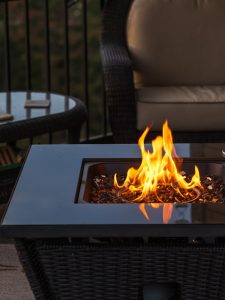
Safety regulators have issued a nationwide warning against tabletop fire pits.
Unlike conventional fire pits and fireplaces, most tabletop fire pits use liquid fuels like isopropyl alcohol. Liquid-based fuels are cleaner than burning coal or wood, but defective fire pits can present serious risks.
“Igniting a pool of alcohol or other liquid fuel in a fire pit’s open container creates an uncontrollable pool fire, which can suddenly produce larger, hotter flames that can spread beyond the fire pit product,” the U.S. Consumer Product Safety Commission wrote in a 2024 warning. “A small flame in the fire pit can be hard to see and can ignite alcohol or other liquid fuel as it is poured, causing an explosion that propels flames and burning liquid onto the consumer or bystanders.”
The Consumer Product Safety Commission has determined that tabletop fire pits are so dangerous that “consumers should immediately stop using and dispose of these products,” and that “sellers should stop selling these products.”
The Real Risk Of Tabletop Fire Pits
Not all tabletop fire pits are dangerous.
In its advisory, the Consumer Product Safety Commission specifically warned Americans against purchasing tabletop fire pits that require fuel to be poured directly into an open reservoir.
The CPSC identified two specific risks of these types of fire pits:
- Accidental ignitions can cause invisible vapors to ignite; and
- In some cases, flames can “jet” out of a fuel container when attempting to refuel a pit with an active fire.
If liquid fuel ignites, it can produce flames with temperatures above 1,600 degrees Fahrenheit in less than a second.
Are You Eligible To File A Tabletop Fire Pit Lawsuit?
Manufacturers have a legal responsibility to sell products that are safe for their intended use.
If you were injured while using a tabletop fire pit for its intended use, you could be entitled to file a product liability lawsuit against the manufacturer, an installation company, or an independent contractor.
You may have standing to sue if your accident caused serious physical injuries, including, but not limited to, the following:
- Second-degree burns;
- Third-degree burns;
- Scarring or other disfigurement;
- Complications from an accident-related medical condition;
- Physical trauma from an explosive shockwave; and
- Death.
You must typically be able to establish that you have suffered a physical injury to sue, but that is not the only requirement for a successful product liability lawsuit. Instead, you may be expected to prove a series of elements demonstrating either that the product was defective or that the manufacturer was in some way negligent.
Compensation In A Fire Pit Injury Lawsuit
If you or a loved one has been injured in a fire pit accident that was not your fault, you could be entitled to significant compensation. Your damages could include compensation for:
- Your medical bills;
- The costs of ongoing and future care;
- Physical rehabilitation;
- Reconstructive surgery;
- Lost income from work;
- Emotional pain and suffering;
- Physical pain and suffering;
- Loss of enjoyment;
- Disfigurement; and
- Wrongful death.
Since our founding in 2005, the Dietrich Law Firm P.C. has fought to protect the rights of Buffalo families. A recognized U.S. News & World Report Best Law Firm, we know what goes into a successful product liability lawsuit and we have the results to prove it. Call Jed Dietrich, Esq., today at 716-839-3939 to speak to a tabletop fire pit injury lawyer and schedule your 100% free, no-obligation consultation as soon as possible.