 Buffalo Personal Injury Lawyer News



T-Bone Car Accidents


 A T-Bone car accident occurs when one vehicle collides with another at a ninety-degree angle, forming a “T” shape. Typically, T-bones involve two vehicles and are also known as side-impact crashes or broadside collisions. These types of accidents tend to cause severe injuries and even fatalities. According to the National Highway Traffic Administration’s (NHTSA’s) Traffic Safety Facts Annual Report, angle collisions accounted for 6,354 deaths, approximately 20 percent of traffic fatalities.
How Do They Occur?
Most T-Bone accidents happen at intersections when one vehicle fails to yield the right-of-way. For instance, a car may run a stop sign or red light and smash into the passenger side of another vehicle. However, side-impact crashes can occur anywhere and are not just limited to intersections. One common broadside scenario includes a driver backing out of an alley without noticing approaching vehicles. Additionally, various other factors can significantly contribute to broadsides such as:
 Shoulder injuries sustained in car accidents can be excruciating and traumatic. Even minor collisions can damage the tendons, nerves, soft tissues, bones, and joints of the shoulder. Given the anatomy of the human body, the rotator cuff region is particularly vulnerable to severe aching and pain following a crash. Please continue reading to learn more about shoulder injuries and your rights as a car accident victim.
 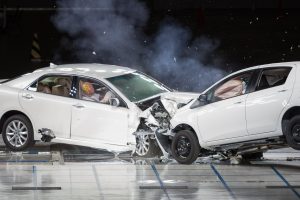 A head-on collision, also commonly known as a “front impact accident” or “frontal crash,” occurs when two vehicles moving in opposite directions smash into each other’s front ends. Because of the high speeds often involved, head-on collisions tend to be some of the most gruesome types of car accidents. Generally, the gravity of injuries accompanying front impact accidents is much more substantial when compared to other types of crashes, such as sideswipes or rear-end collisions. For victims that are fortunate enough to survive these ravaging crashes, it may take months or even years to begin to recover physically, psychologically, and emotionally. Not to mention the hospital bills and other financial damages to consider, which add further stress to victims and their families.
  It is crucial to retain a personal injury attorney whenever you have been injured in an accident caused by someone else’s negligence, carelessness, or recklessness. Everything that you do in the wake of an accident can influence the outcome of your lawsuit. Even the slightest mistake could lead to a substantially lower settlement offer or judgment. The Dietrich Law Firm P.C.’s battle-tested personal injury lawyers recommend contacting us immediately after your accident. Having a legal expert carefully review your claim and answer questions can help you better understand your legal rights. After consulting with our highly experienced and knowledgeable attorneys, you can decide the best way to proceed with your case.
  While the safety features on vehicles advance, most manufacturers have focused on protecting drivers while leaving passenger safety systems deficient. Consequently, passengers often suffer the brunt of injuries. Depending on the circumstances that led to the accident, passengers may be able to hold the drivers of the cars they were in, drivers of other vehicles involved, manufacturers of defective vehicles or parts, and government entities responsible for their injuries.
 Approximately only 3 percent of all personal injury cases go to trial. Most lawsuits are settled outside of court through negotiation or alternative dispute resolution. One of the most common types of alternative dispute resolution is called mediation. Mediation is a voluntary process where the plaintiff and defendant meet with a neutral third party called a mediator. The mediator, often a retired judge or attorney with vast experience and knowledge in personal injury litigation, tries to help both sides reach a mutually agreeable settlement.
  The legal doctrine of vicarious liability is a form of secondary liability, meaning that one party can be held accountable for the acts of another. Vicarious liability commonly arises out of the legal responsibility employers have for the actions of their employees. In other words, when an employee’s negligence or irresponsibility during the scope of their employment causes an injury, their employer may also be held liable. Throughout history, various legal terms, such as
  Car accidents are one of the country’s leading causes of neck injuries. Over 800,000 crashes involving neck injuries are reported throughout the United States each year. Despite being a highly vulnerable part of the body, the neck has minimal protection during a car accident. While wearing a seatbelt can help keep your body in place, your neck and head are left unrestrained. In the event of a car crash, a victim’s neck can quickly jolt back and forth, be violently jerked from one side to another, or even be struck by flying debris. Abrupt, sharp movements are known for causing severe injuries to the cervical spine’s tendons, ligaments, nerves, muscles, and joints.
  Some insurance companies are all about their bottom lines and will do everything possible to avoid paying legitimate claims. A bad faith insurance claim refers to an insurer trying to default on an obligation to a client. When policyholders file claims and insurance companies give them the rightfully deserved payment, that money is deducted from the insurer’s potential profits. Some insurance companies resort to various tricks and tactics to make claimants’ lives difficult to avoid lower profit margins.
  Accidents are an unfortunate part of life. Since very few people ever plan on getting injured in an accident, most victims are not adequately prepared for the repercussions. Even relatively minor accidents can result in severe injuries, future health complications, emotional strain, and financial hardships. Pursuing a personal injury claim may be the only way to make yourself whole again. However, pursuing your case alone could be an extremely complicated and intimidating task.