Buffalo Personal Injury Lawyer News
Common Personal Injury Accidents In Buffalo, New York


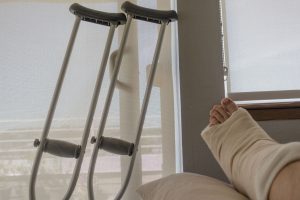 Approximately 40 million accident victims require medical treatment for an assortment of personal injuries each year. With numerous types of accident-related damages, some have the potential to drastically alter victims’ lives forever. Most personal injuries result from accidents involving another’s negligence. Unfortunately, negligence can cause innocent victims to suffer severe injuries, which lead to costly hospital bills, rehabilitation, pain and suffering, and lost wages from missing work.
The Five Most Prevalent Types Of Personal Injury Accidents
- Car Crashes: Car accident claims are the most common personal injury cases in Buffalo, New York, and throughout the country. Every year, millions of victims sustain severe injuries due to car crashes. Collisions are often caused by careless or irresponsible driving practices, such as distracted driving, driving while sleep-deprived, driving under the influence, and speeding.
 Crowded buses can easily weigh over 60,000 pounds, while the average car is barely 3,000 pounds. A size difference that lends to bus crashes being some of the most devastating accidents that take place on our roads. According to the Federal Motor Carrier Safety Administration (FMCSA), bus accidents resulted in over 260 fatalities in a single recent year alone.
  Every driver knows that operating a vehicle while impaired or intoxicated is extremely dangerous and illegal. Driving under the influence of drugs or alcohol is one of the biggest traffic safety problems in the country today. According to the Centers for Disease Control and Prevention (CDC), 29 victims throughout the United States die in collisions involving alcohol-impaired drivers every day. That is equivalent to 1 fatality every 50 minutes! In New York State, over 40 percent of all fatal highway accidents involve impaired driving. These facts and statistics do very little to show all of the debilitating injuries, life-long disfigurements, tens of thousands of innocent lives cut short, and families devastated because of motorists who got behind the wheel after consuming alcohol or drugs.
  A head injury that disrupts the regular functioning of the brain is known as a traumatic brain injury (TBI). Head injuries are a significant cause of disability and death. Approximately 2.9 million victims suffer traumatic brain injuries in the United States each year. Even relatively minor brain injuries can have catastrophic effects on a victim. According to the Centers for Disease Control and Prevention’s (CDC) most recent available data, there were nearly 61,000 TBI-related fatalities in 2019 alone. That is roughly 166 deaths per day. While anyone can suffer a head injury, figures suggest that children and elderly adults are at the most significant risk.
  According to the National Sleep Foundation, roughly 50 percent of all adult motorists admit to regularly driving while feeling tired. Approximately 20 percent confess to dozing off behind the wheel during the last 12 months, and over 40 percent admit to falling asleep at some point in their driving careers. These shocking figures reveal just how prevalent driving while tired is. However, many drivers fail to realize the extreme dangers involved with falling asleep behind the wheel. The National Highway Traffic Safety Administration (NHTSA) reported that, in 2017 alone, drowsy driving resulted in more than 91,000 accidents, which caused around 50,000 injuries and 800 fatalities.
  According to the National Highway Traffic Safety Administration (NHTSA), more than 2,840 victims suffered fatalities in distracted driving accidents during 2018 alone. Roughly 9 victims are killed each day in the 1,000 plus car crashes involving distracted drivers. It is no surprise that the Governor’s Traffic Safety Committee reported distracted driving as the leading contributing factor in New York State collisions.
  Car crashes can range in severity from minor cuts and bruises to total paralysis and even death. According to the National Highway Traffic Safety Administration (NHTSA), in 2019, over 36,000 victims died in car accidents. The actual injuries suffered depend considerably on the nature of the accident, the speed of the cars, the type of vehicles involved, and whether or not the occupants were wearing their seatbelts. Unfortunately, many victims suffer long-term effects from car accidents that outlive their initial visits to the emergency room.
  No one ever anticipates getting into an accident and withstanding life-changing injuries or worse. After an accident, it is customary to be angry, disoriented, and in some pain. Some victims may not know what to do after an accident and panic. Unfortunately, the actions you take directly following the incident could drastically impact the outcome of your future lawsuit. Even the slightest mistake could result in significantly less compensation. It is crucial to be prepared so that you can strengthen your claim. Below our