 Buffalo Personal Injury Lawyer News
Tesla Autopilot Lawsuit Results: What the Latest Verdicts and Settlements Mean for Injury Victims


Nobody doubts that Tesla’s Autopilot is an advanced piece of technology.
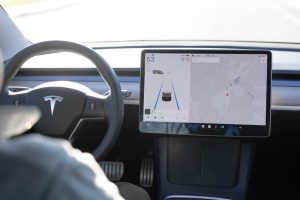
Since it was first released in 2015, Autopilot has only continued to expand its capabilities. Using a complex network of cameras, sensors, and computer processors, Autopilot in its latest form can help drivers parallel park, navigate cross-country, and even cruise hands-free at highway speeds.
However, even Tesla has been forced to admit that Autopilot is not perfect.
Autopilot’s limitations are not abstract, either. According to a recent Guardian analysis, consumers reported more than 3,000 Autopilot-related concerns between 2015 and 2022. These concerns included instances of “phantom braking,” unintentional acceleration, and faulty obstacle detection. In total, the Guardian documented more than 1,000 crashes wherein Autopilot was identified as either a potential cause or contributing factor.
Tesla has responded to these concerns by introducing new systems to keep drivers’ attention focused on the road. However, Tesla has long refused to admit that Autopilot could be a problem. Instead, its lawyers have sought to hold drivers solely responsible for accidents involving Autopilot. Tesla employed this deceptively simple strategy repeatedly and to great effect, convincing courts across the country that it cannot be held liable for Autopilot errors in almost any instance where the driver was found partly to blame.
Now, a recent series of court rulings and settlement offers could signal that Tesla’s legal fortunes are changing, with judges and juries taking a more skeptical stance on the company’s attempts to minimize its liability for Autopilot injuries.
The California Wrongful Death Settlement
Part of the reason that Tesla is reluctant to settle Autopilot-related claims is that it knows any payment could encourage more victims to step forward. More lawsuits and more settlements mean greater expenses and decreased revenue. Tesla typically prefers to take its chances at trial rather than make payments that could damage both its profits and reputation.
However, a recent claim may have broken Tesla’s resolve.
In September 2025, Tesla announced that it had agreed to settle a wrongful death lawsuit filed by the estate of Jovani Moldonado. At the time of the accident, Moldanado, 15, was riding with his father in a pick-up truck when they were rear-ended by a Tesla. The force of the collision ejected the teenage boy from the truck; he was pronounced dead shortly afterward.
Attorneys for the Moldonado estate noted that the driver of the Tesla was using Autopilot and had not touched the steering wheel in the 14 seconds preceding the crash. Tesla tried to argue that the driver bore full responsibility, but it ended up settling instead.
A Florida Judge Upholds A Massive Verdict
Tesla’s decision to settle the California claim was likely influenced by a massive loss on the other side of the country. In that case, a federal judge upheld a jury verdict awarding more than $240 million to the family of a 22-year-old woman who was killed after being hit by a Tesla Model S in an intersection accident.
Tesla immediately appealed the verdict, again arguing that car-makers cannot be expected to “insure the world against harms caused by reckless drivers.” U.S. District Judge Beth Bloom disagreed, finding that the evidence presented at trial “more than supports” the family’s claim that an Autopilot defect was at least partly responsible for the crash.
Contact The Dietrich Law Firm P.C. Today
Do not take on Tesla alone. If you think you could have an Autopilot injury claim, contact the Dietrich Law Firm P.C. today at 1-866-529-5334 to speak to a Tesla injury lawyer and schedule your 100% free, no-obligation consultation.